
Therapeutic Management of Contagious Ecthyma (Orf) in Goats — Understanding, Diagnosis & Recovery Contagious ecthyma, also known as Orf, is a highly infectious viral disease that affects goats and sheep. Characterized by scabby lesions around the mouth,
🔬 What is Contagious Ecthyma (Orf)?
Contagious ecthyma is a viral skin disease caused by a parapox virus from the poxviridae family. It typically affects:
• Lips and mouth region
• Udder and feet
• Nostrils and eyes
Also known as:
• Orf
• Sore mouth
• Scabby mouth
• Contagious pustular dermatitis
📍 Where and When It Occurs:
• Common in late summer, fall, and winter
• Spreads rapidly in close-contact environments like farms or herds
• Can affect all ages, though young goats are more susceptible
⸻
🧪 Case Summary: 8-Month-Old Goat
An 8-month-old goat was brought to the Veterinary Clinical Complex, N.D.V.S.U., Jabalpur, with:
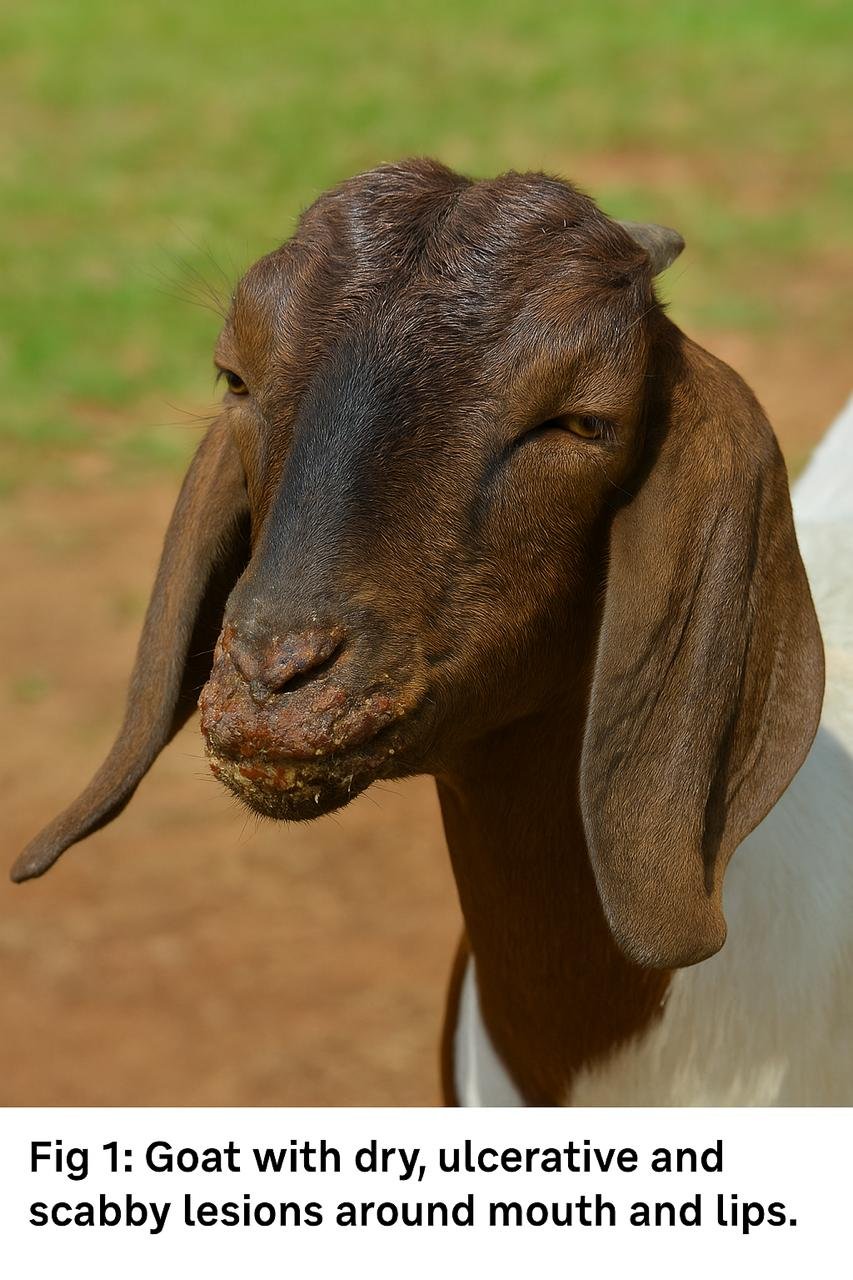
• Dry, ulcerative lesions on mouth and lips
• Salivation, anorexia, and depression
• No vaccination or deworming history
⚠ Clinical Signs:
• High temperature (104.3°F)
• Heart rate: 65 beats/min
• Respiration: 23 breaths/min
• No nasal discharge or respiratory involvement
The clinical exam and history pointed to Contagious Ecthyma (Orf).
⸻
🧬 Symptoms of Orf in Goats
• Ulcerative, scabby lesions on lips and mouth
• Painful pustules or papules on muzzle, ears, and nostrils
• Excessive salivation
• Difficulty eating → leads to weight loss
• Possible lesions on udders, anus, and feet in severe cases
• In some cases, lameness due to foot lesions
⸻
💉 Treatment Protocol Used
Since Orf is viral, there is no specific antiviral treatment. However, symptomatic care is essential to prevent secondary infections and ease discomfort.
✅ Treatment Plan:
1. Enrofloxacin (Antibiotic)
• Dose: 5 mg/kg body weight
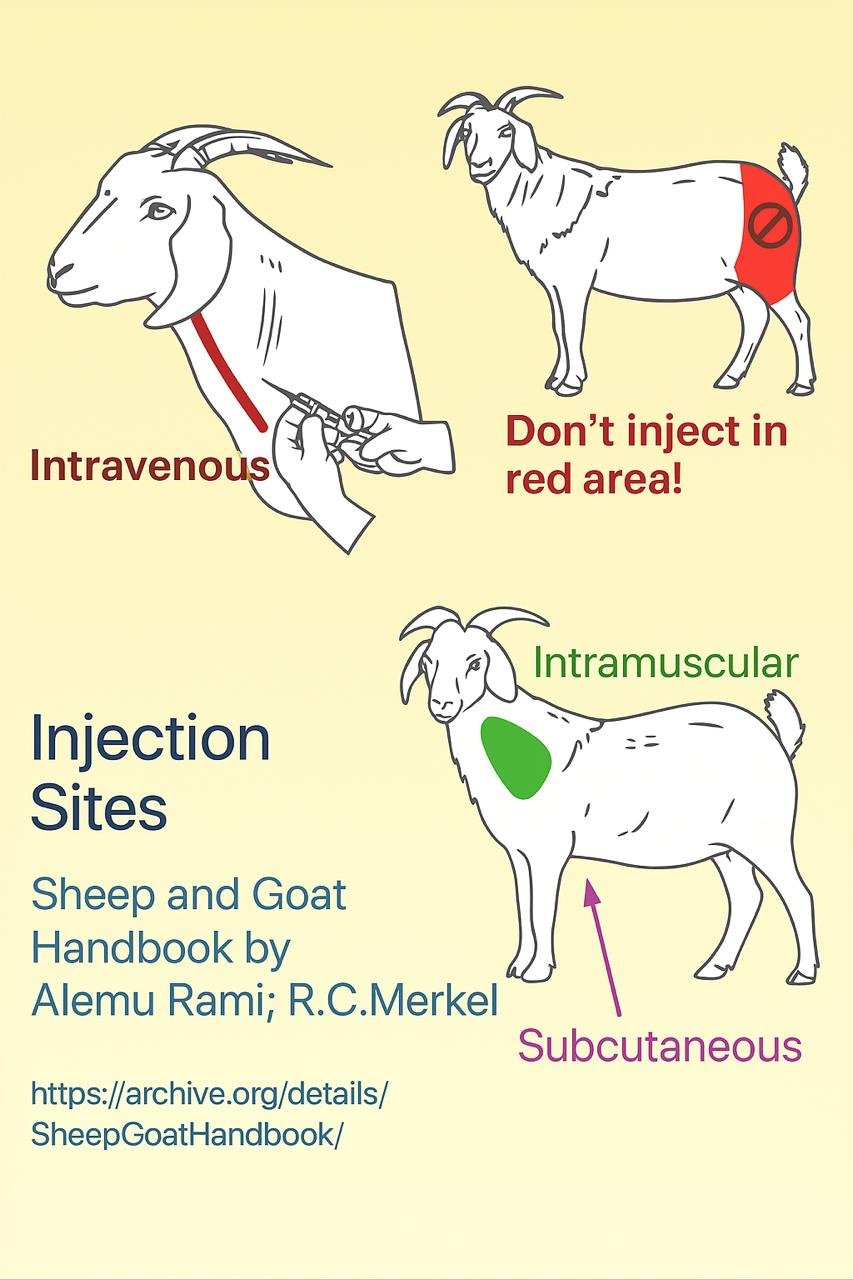
• Route: Intramuscular
• Duration: Once daily for 5 days
2. Meloxicam (Pain & Inflammation Relief)
• Dose: 0.2 mg/kg body weight
• Duration: Daily for 3 days
This approach helped:
• Control secondary bacterial infection
• Reduce pain, inflammation, and fever
• Improve feeding and energy levels
🩺 Outcome:
The goat recovered smoothly without complications.
⸻
🛡 Prevention & Control
• Vaccination: Available in endemic areas (consult a vet)
• Isolate infected animals
• Disinfect feeding equipment regularly
• Maintain good hygiene and deworming schedule
• Avoid overcrowding in goat sheds
🔬 What is Contagious Ecthyma (Orf)?
Contagious ecthyma is a viral skin disease caused by a parapox virus from the poxviridae family. It typically affects:
• Lips and mouth region
• Udder and feet
• Nostrils and eyes
Also known as:
• Orf
• Sore mouth
• Scabby mouth
• Contagious pustular dermatitis
📍 Where and When It Occurs:
• Common in late summer, fall, and winter
• Spreads rapidly in close-contact environments like farms or herds
• Can affect all ages, though young goats are more susceptible
⸻
🧪 Case Summary: 8-Month-Old Goat
An 8-month-old goat was brought to the Veterinary Clinical Complex, N.D.V.S.U., Jabalpur, with:
• Dry, ulcerative lesions on mouth and lips
• Salivation, anorexia, and depression
• No vaccination or deworming history
⚠ Clinical Signs:
• High temperature (104.3°F)
• Heart rate: 65 beats/min
• Respiration: 23 breaths/min
• No nasal discharge or respiratory involvement
The clinical exam and history pointed to Contagious Ecthyma (Orf).
⸻
🧬 Symptoms of Orf in Goats
• Ulcerative, scabby lesions on lips and mouth
• Painful pustules or papules on muzzle, ears, and nostrils
• Excessive salivation
• Difficulty eating → leads to weight loss
• Possible lesions on udders, anus, and feet in severe cases
• In some cases, lameness due to foot lesions
⸻
💉 Treatment Protocol Used
Since Orf is viral, there is no specific antiviral treatment. However, symptomatic care is essential to prevent secondary infections and ease discomfort.
✅ Treatment Plan:
1. Enrofloxacin (Antibiotic)
• Dose: 5 mg/kg body weight
• Route: Intramuscular
• Duration: Once daily for 5 days
2. Meloxicam (Pain & Inflammation Relief)
• Dose: 0.2 mg/kg body weight
• Duration: Daily for 3 days
This approach helped:
• Control secondary bacterial infection
• Reduce pain, inflammation, and fever
• Improve feeding and energy levels
🩺 Outcome:
The goat recovered smoothly without complications.
⸻
🛡 Prevention & Control
• Vaccination: Available in endemic areas (consult a vet)
• Isolate infected animals
• Disinfect feeding equipment regularly
• Maintain good hygiene and deworming schedule
• Avoid overcrowding in goat sheds







Contact Us