
🐱 Dermatophytosis in Cats: Causes, Symptoms & Treatment of Ringworm (Microsporum canis)
Dermatophytosis, commonly known as ringworm, is a contagious fungal skin infection that affects both animals and humans. In cats, one of the most frequent causative agents is a fungus called Microsporum canis.
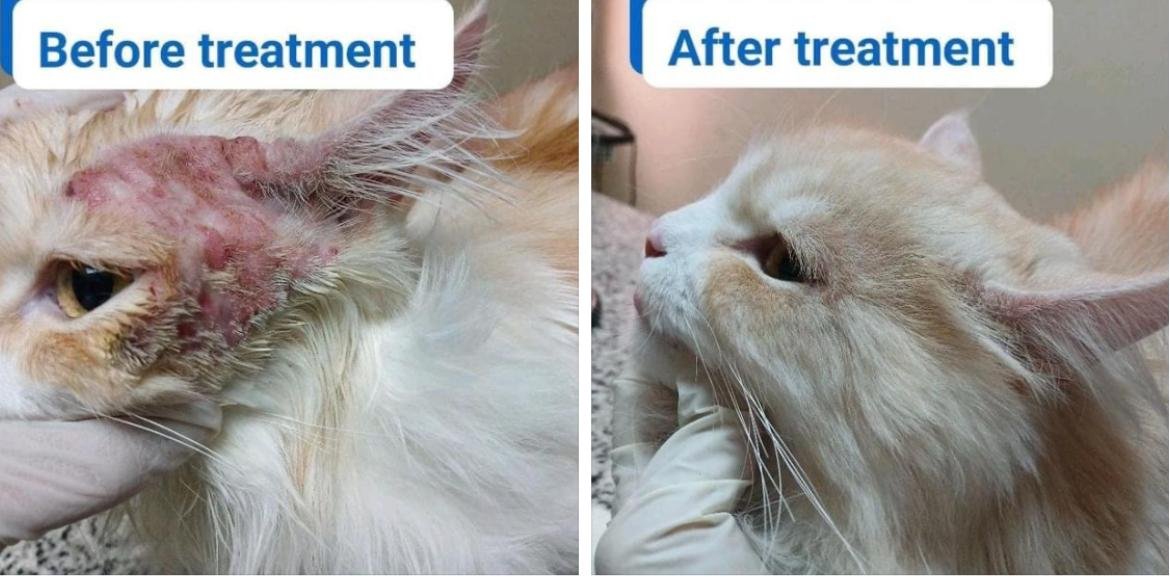
🔬 What is Microsporum canis?
Microsporum canis is a zoophilic dermatophyte—a type of fungus that infects keratinized tissues such as skin, hair, and claws. It spreads easily through direct contact with infected animals, contaminated objects (brushes, bedding), or even the environment.
🐾 How is it Diagnosed?
One of the most common and useful tools for diagnosing M. canis infection is the Wood’s lamp examination.
• Wood’s lamp (UV light): Infected hair shafts often show a bright yellow-green fluorescence under UV light, which helps in preliminary diagnosis.
• Fungal culture or PCR: Definitive diagnosis can be confirmed by fungal culture from skin scrapings or molecular tests.
❗ Clinical Signs
Signs of dermatophytosis in cats may vary depending on severity, but typically include:
• Circular patches of hair loss (alopecia)
• Scaly or crusty skin
• Redness and inflammation
• Broken or brittle hair
• Mild to moderate itching
• Lesions commonly appear on the head, ears, and limbs
Some cats may be asymptomatic carriers, especially long-haired breeds like Persians.
💊 Treatment Plan
Managing dermatophytosis requires both systemic and topical antifungal therapy:
1. Systemic Antifungal (Oral medication):
• Itraconazole
• Dosage: 5 mg/kg orally, once daily
• Schedule: Administer in a week-on/week-off cycle for 3 cycles
• Helps treat deeper skin and hair infections
2. Topical Antifungal Treatments:
• Medicated Baths with:
• Chlorhexidine or Betadine (povidone-iodine) solution
• Apply to the whole body, twice a week
• Antifungal Creams:
• Clotrimazole 1% cream
• Apply twice daily for 2–4 weeks
• Avoid contact with eyes and mucous membranes
⸻
⚠ Important Notes:
• Treat all in-contact animals if possible.
• Clean and disinfect the environment thoroughly.
• Isolate infected cats to prevent spreading.
• Regularly monitor for recurrence even after visible healing.
⸻
🧼 Prevention Tips:
• Maintain proper hygiene and grooming.
• Quarantine new or rescued animals before introduction.
• Use antifungal sprays or wipes in high-risk environments like shelters or multi-cat households.
⸻
🧑⚕ When to See a Vet?
If your cat shows signs of skin issues or hair loss, consult a veterinarian immediately. Early diagnosis and proper treatment are key to preventing spread and complications.
⚠ Important Notes:
• Treat all in-contact animals if possible.
• Clean and disinfect the environment thoroughly.
• Isolate infected cats to prevent spreading.
• Regularly monitor for recurrence even after visible healing.
🧼 Prevention Tips:
• Maintain proper hygiene and grooming.
• Quarantine new or rescued animals before introduction.
• Use antifungal sprays or wipes in high-risk environments like shelters or multi-cat households.
🧑⚕ When to See a Vet?
If your cat shows signs of skin issues or hair loss, consult a veterinarian immediately. Early diagnosis and proper treatment are key to preventing spread and complications.







Contact Us